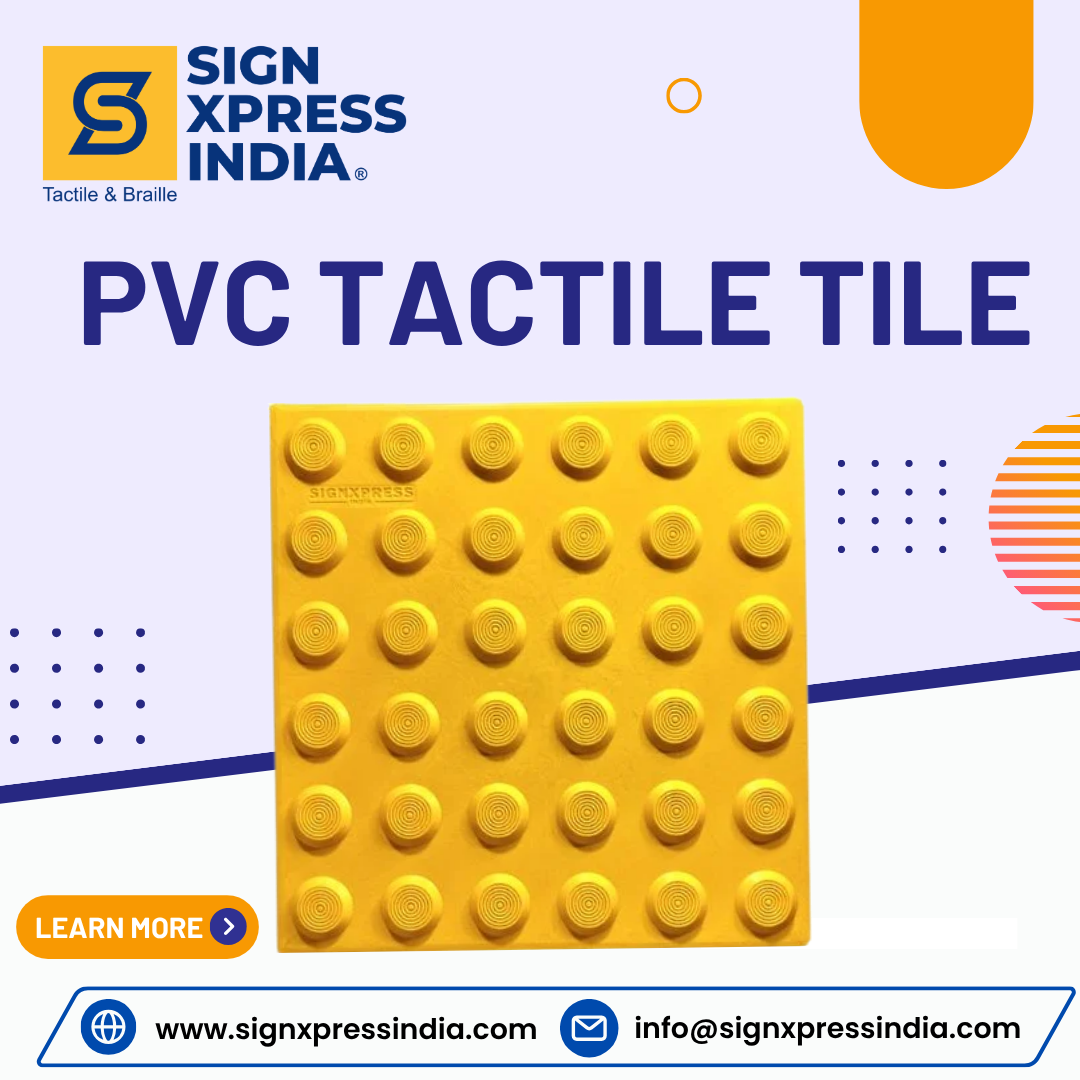





PVC Tactile tile


Product Descriptions
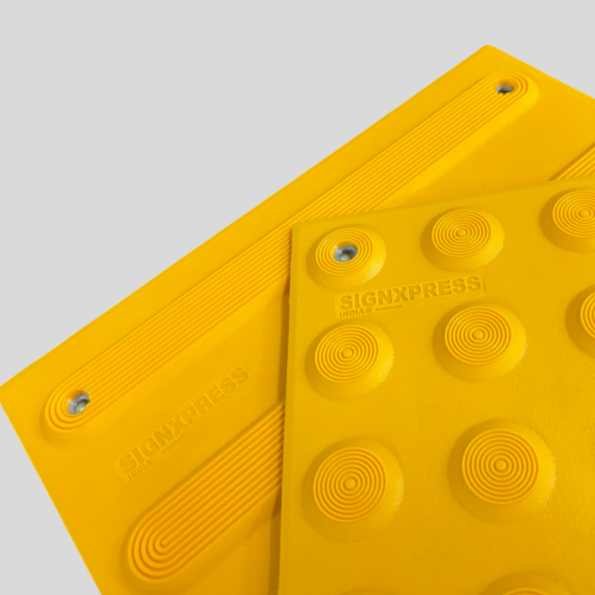
Signxpress India’s PVC Tactile Tiles (300x300x7mm) are designed to provide affordable and reliable accessibility solutions. Made from high-quality polyvinyl chloride, these tiles offer strong anti-slip properties, weather resistance, and durability. Suitable for indoor and outdoor use, they are ideal for footpaths, metro stations, schools, and public spaces. Installed using cement, they ensure firm surface bonding. These tiles help guide visually impaired individuals safely, aligning with accessibility standards like the Accessible India Mission and ADA guidelines.

Available Colors
Item Code
Tape
Price
GST
PVCTT 003A
PVCTT 003B
PVCTT 003C
PLAIN
TISSUE
BUTYL
INR 75.00
INR 95.00
INR 120.00
18%
18%
18%
Discount Applicable on Bulk Quantity
Specifications
- Sizes: 300mm x 300mm x 7mm
- Types: Warning (dots) & Directional (bars)
- Fixing Options: Self-adhesive tape
- Features: Weatherproof, UV-resistant, anti-slip
- Applications: Metro stations, airports, footpaths, malls
Lead time
| Quantity (pieces) | 1 - 2000 | > 2000 |
|---|---|---|
| Time to be taken | Ready Stock | To be negoatiated |
Shipping
Shipping fee and delivery data to be negotiated. Contact for more details.


PVC Tactile Tile: A Reliable Accessibility Solution for Safer Public Spaces
A PVC tactile tile is an essential accessibility product designed to help visually impaired and blind people navigate public and private spaces safely. These tiles have raised surface patterns that can be detected underfoot or with a mobility cane. The patterns communicate important information, such as where to stop, when to change direction, or how to follow a safe walking route.
As accessibility awareness continues to grow, property owners, architects, contractors, facility managers, and government organizations are increasingly using PVC tactile tiles for blind pedestrians. They are commonly installed in railway stations, metro stations, hospitals, shopping centres, schools, airports, offices, footpaths, and residential buildings.
PVC tactile tiles are lightweight, durable, slip-resistant, and easy to install. They offer a practical way to improve safety without requiring major structural changes. Their visible colour contrast also helps people with partial vision identify changes in the walking surface.
This guide explains the types, applications, advantages, installation considerations, limitations, and selection factors associated with PVC tactile flooring. It also explains why choosing reliable PVC tactile tile suppliers such as signxpressindia can support better accessibility and long-term performance.

What Is a PVC Tactile Tile?
A PVC tactile tile is made from polyvinyl chloride and features raised surface patterns. These patterns communicate important navigation information to people with visual impairments.
There are mainly two common patterns:
- Raised circular dots for warning
- Raised parallel bars for direction
The raised dots alert users about hazards such as stairs, platform edges, ramps, crossings, and level changes. The raised bars guide users along a safe walking route.
Good-quality PVC tactile indicator tiles also use contrasting colours. This helps people with partial vision identify the tactile path from the surrounding floor.
How PVC Tactile Tiles for Blind People Work
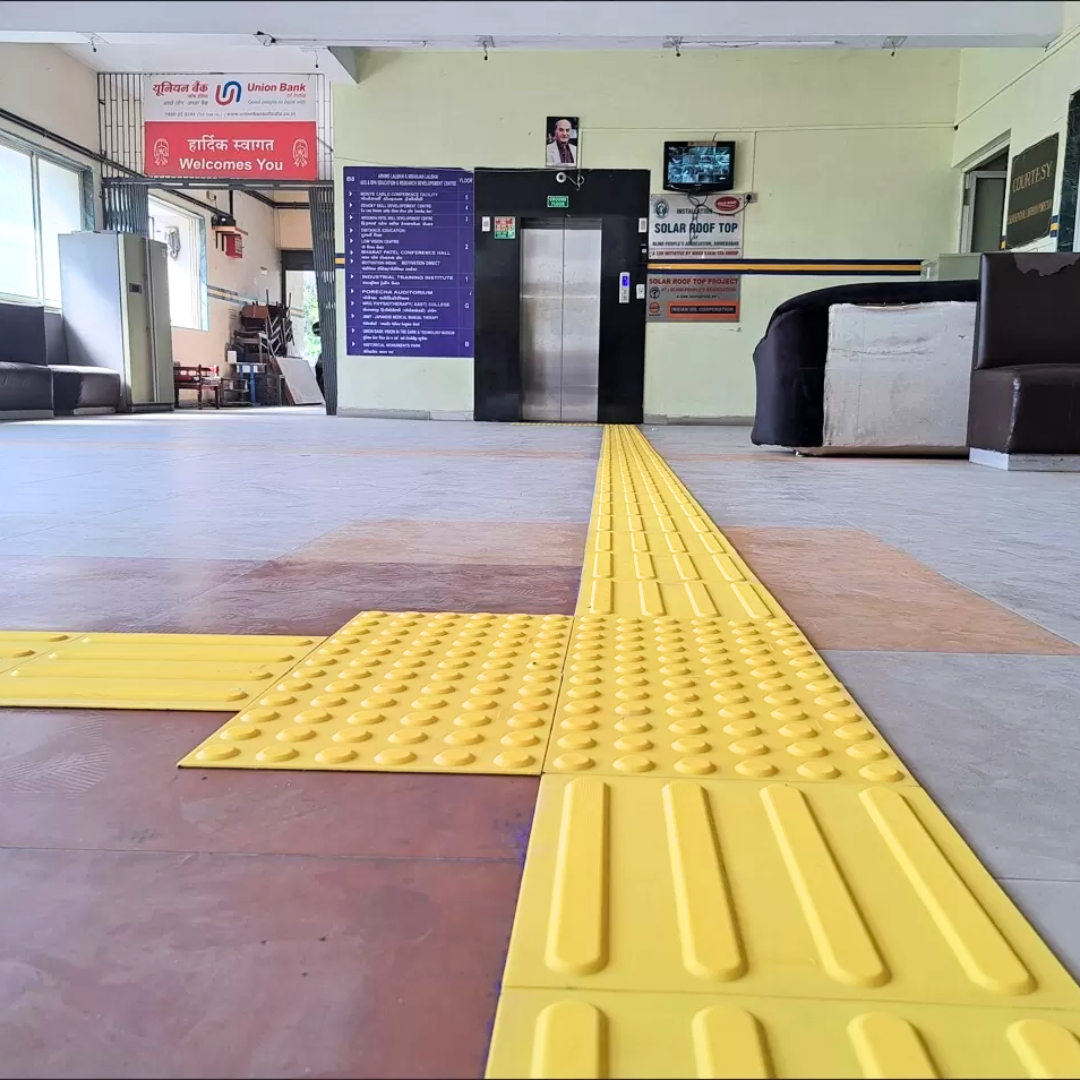
PVC tactile tiles for blind pedestrians work as a floor-based communication system. Users can feel the raised surface under their feet or identify it with a white cane.
For example, a person may follow directional tiles through a railway station. Before reaching the platform edge, the person feels warning tiles and understands that a hazard is nearby.
PVC tactile tiles can help users:
- Follow a safe walking route
- Detect stairs and escalators
- Identify platform edges
- Find entrances and exits
- Reach lifts and reception counters
- Recognise intersections and route changes
- Travel more independently
A complete tactile route should connect important areas instead of ending suddenly in an open space.
Main Types of PVC Tactile Tiles
Different types of PVC tactile floor tiles are used for different accessibility purposes.
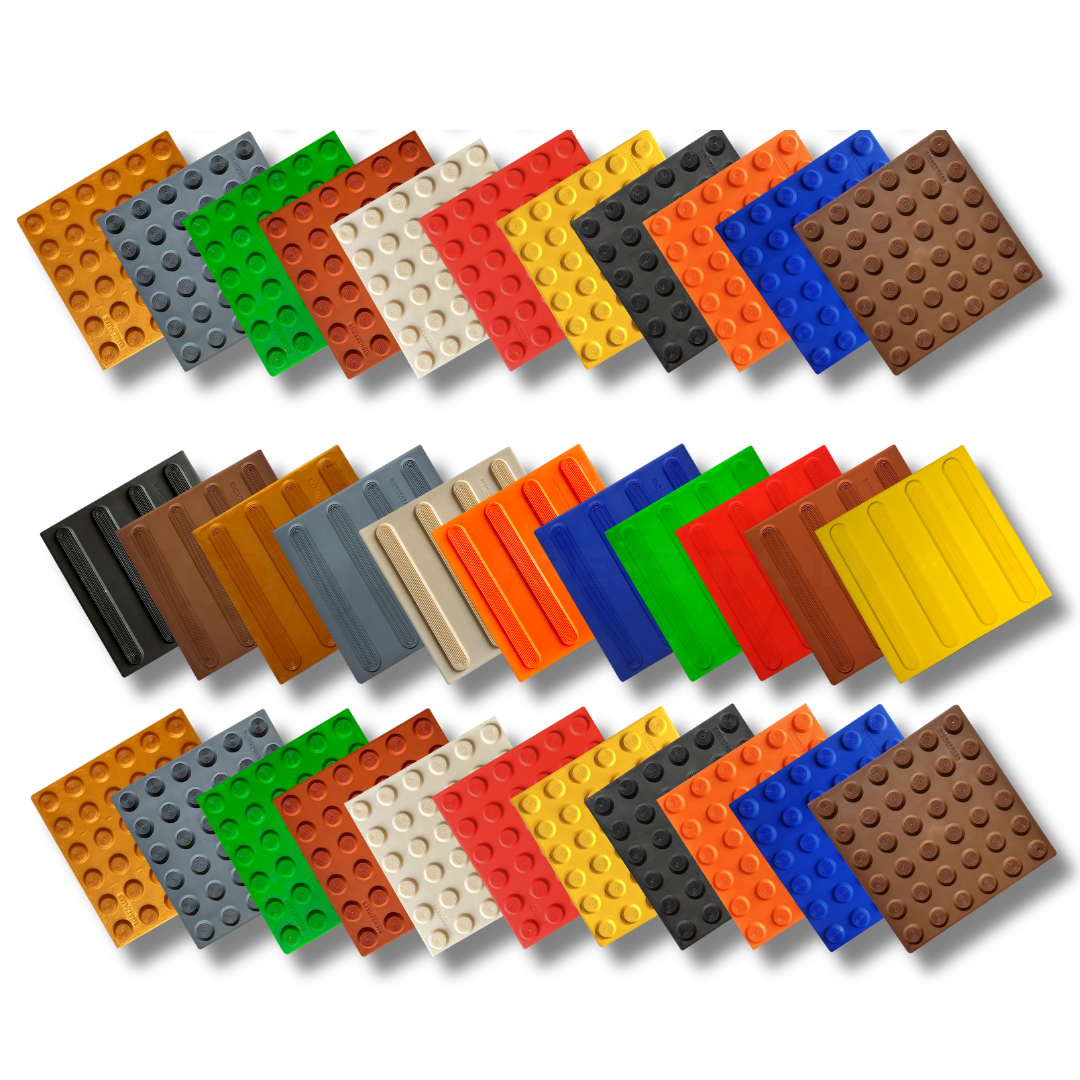
PVC Warning Tactile Tiles
Warning tiles contain raised circular studs or dome-shaped patterns. They tell users to stop, slow down, or move carefully.
Warning PVC tactile tiles are commonly installed near:
- Staircases
- Escalators
- Railway platforms
- Metro platforms
- Pedestrian crossings
- Ramps
- Lift entrances
- Emergency exits
- Changes in floor level
Warning tiles must be installed before the hazard so that users have enough time to react safely.
Comparison of PVC Tactile Tile Types
| PVC Tactile Tile Type | Main Purpose | Surface Pattern | Common Applications |
|---|---|---|---|
|
Alerts users to hazards or changes |
Raised circular studs |
Stairs, lifts, platforms, crossings |
Must be placed before the hazard |
|
Guides users along a route |
Raised parallel bars |
Corridors, stations, offices, public buildings |
Bars must follow the travel direction |
|
Self-adhesive tactile tile |
Supports faster installation |
Supports faster installation |
Stud or bar pattern |
|
Adhesive-fixed tactile tile |
Provides secure floor bonding |
Stud or bar pattern |
High-traffic public areas |
|
Individual tactile indicators |
Creates a customised pattern |
Separate studs or bars |
Premium interiors and custom layouts |
PVC Directional Tactile Tiles
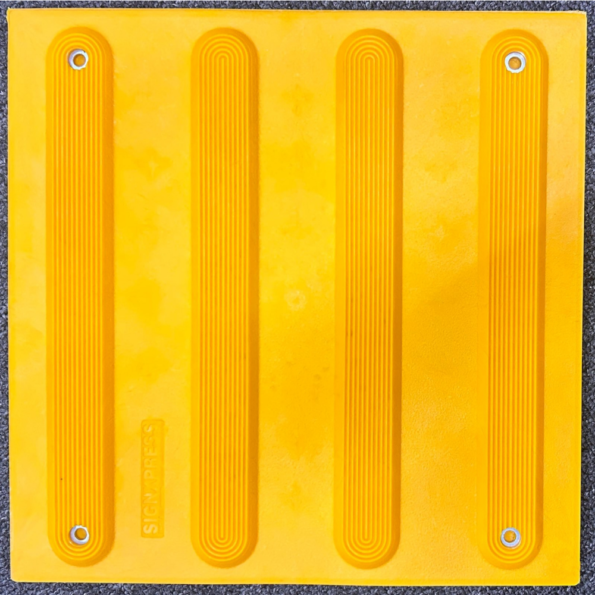
Directional tiles have raised parallel bars. These bars show the direction in which a visually impaired person should walk.
Directional PVC tactile floor tiles are suitable for:
- Long corridors
- Airport terminals
- Hospital pathways
- Office buildings
- Shopping centres
- Educational institutions
- Government facilities
- Transport stations
The bars must run in the direction of travel. Incorrect tile alignment may confuse users and create an unsafe route.
PVC Tactile Indicator Tiles
PVC tactile indicator tiles include warning, directional, and decision-point patterns. They help users understand the layout of a building or public space.
PVC tactile indicator tiles can guide people towards:
- Reception counters
- Ticket counters
- Lifts
- Staircases
- Accessible toilets
- Information desks
- Boarding areas
- Emergency exits
These tiles should be used consistently throughout the property. Unnecessary turns and broken tactile routes should be avoided.
Common Applications of PVC Tactile Floor Tiles
 PVC tactile floor tiles are suitable for many commercial, institutional, and public locations.
Railway and Metro Stations
PVC tactile tiles can guide passengers towards ticket counters, platforms, lifts, exits, and security checkpoints. Warning tiles can be installed before platform edges and staircases.
Hospitals
Hospitals can use PVC tactile indicator tiles to guide patients towards reception desks, pharmacies, lifts, diagnostic rooms, accessible toilets, and emergency areas.
Schools and Colleges
Educational institutions can install PVC tactile tiles for blind students near classrooms, libraries, laboratories, auditoriums, staircases, and administrative offices.
Airports and Bus Terminals
Directional PVC tactile tiles can create clear pathways through large open terminals where walls or railings are not available for natural guidance.
Shopping Malls and Offices
PVC tactile tiles can connect entrances, reception desks, lifts, escalators, washrooms, service counters, and emergency exits.
Benefits of PVC Tactile Tiles
A PVC tactile tile offers several accessibility and operational advantages.
- Improved safety: Raised patterns warn users about hazards and route changes.
- Independent navigation: Visually impaired people can move with greater confidence.
- Easy installation: PVC tactile floor tiles can often be installed over suitable existing floors.
- Lightweight material: PVC tiles are easy to transport, position, and handle.
- Visible colour contrast: Bright and contrasting colours support people with low vision.
- Easy maintenance: The tiles can be cleaned using appropriate routine floor-cleaning methods.
- Comfortable surface: PVC is less rigid than some metal and concrete alternatives.
- Versatile use: PVC tactile indicator tiles are suitable for hospitals, stations, offices, schools, and malls.
- Cost-effective accessibility: PVC tactile tiles provide strong functional value without requiring complete floor replacement.
How to Select the Right PVC Tactile Tile
Choosing the correct PVC tactile tile requires proper planning.
Identify the Purpose
Decide whether the tile is required for warning, direction, or route intersection. Do not use directional tiles where warning tiles are needed.
Check the Floor Condition
The installation surface should be clean, dry, stable, smooth, and free from oil, dust, moisture, and loose material.
Consider Foot Traffic
Busy locations such as railway stations and hospitals require strong, durable PVC tactile floor tiles with reliable fixing.
Select a Contrasting Colour
The PVC tactile tile colour should be clearly different from the surrounding floor. Contrast improves visibility for people with partial sight.
Check Environmental Conditions
For entrances and semi-outdoor areas, consider moisture, sunlight, heat, cleaning methods, and temperature changes.
Choose Reliable PVC Tactile Tile Suppliers
Professional PVC tactile tile suppliers can help select the correct pattern, colour, material quality, and fixing method for the project.
Installation Tips for PVC Tactile Tiles
Correct installation is essential for long-term performance.
- Plan the complete tactile route.
- Mark the tile layout accurately.
- Clean and prepare the floor.
- Use a compatible fixing method.
- Align directional bars correctly.
- Keep warning tiles at a safe distance from hazards.
- Press every tile evenly.
- Allow proper bonding before opening the area.
- Inspect the entire route after installation.
Poor installation can cause tile movement, loose edges, incorrect direction, and accessibility problems.
Challenges and Limitations
Although PVC tactile tiles offer many benefits, some limitations must be considered.
- Poor floor preparation may cause adhesive failure.
- Low-quality tiles may wear quickly in heavy-traffic areas.
- Raised edges may become a trip hazard.
- Some PVC tiles may not be suitable for harsh outdoor conditions.
- Incorrect pattern placement can confuse users.
- Dirt around the raised patterns may reduce tactile clarity.
- Furniture and signboards may block the tactile path.
Regular inspection and maintenance help prevent these problems.
Why Choose signxpressindia for PVC Tactile Tiles?
signxpressindia provides accessibility-focused solutions for commercial, public, and institutional projects.
By choosing signxpressindia, customers can receive support in selecting suitable:
- PVC warning tactile tiles
- PVC directional tactile tiles
- PVC tactile indicator tiles
- PVC tactile paving tiles
- Colour combinations
- Patterns and applications
- Installation-friendly solutions
signxpressindia understands that a PVC tactile tile is not only a flooring product. It is an important accessibility solution that supports safe and independent movement.
The company focuses on practical product selection, reliable quality, professional appearance, and long-term project value.
Why Choose signxpressindia for PVC Tactile Tiles?
signxpressindia provides accessibility-focused solutions for commercial, public, and institutional projects.
By choosing signxpressindia, customers can receive support in selecting suitable:
- PVC warning tactile tiles
- PVC directional tactile tiles
- PVC tactile indicator tiles
- PVC tactile paving tiles
- Colour combinations
- Patterns and applications
- Installation-friendly solutions
signxpressindia understands that a PVC tactile tile is not only a flooring product. It is an important accessibility solution that supports safe and independent movement.
The company focuses on practical product selection, reliable quality, professional appearance, and long-term project value.
Conclusion
A PVC tactile tile helps visually impaired people identify safe routes, hazards, entrances, exits, stairs, platforms, and important service areas.
Directional tiles guide users along a pathway, while warning tiles alert them before dangerous locations. PVC tactile tiles for blind users also improve independence, confidence, and accessibility in public and private spaces.
PVC tactile floor tiles are lightweight, easy to install, visible, durable, and suitable for many indoor and semi-outdoor environments. However, correct pattern selection, surface preparation, colour contrast, installation, and maintenance are essential.
For reliable PVC tactile indicator tiles, PVC tactile paving tiles, and application-focused guidance, choose signxpressindia. Contact signxpressindia to discuss your accessibility project and select a PVC tactile tile solution that supports safer navigation and better long-term value.
FAQs
A PVC tactile tile is an accessibility flooring product with raised studs or directional bars. It helps blind and visually impaired people identify hazards, follow pathways, and move safely through public and commercial spaces.
PVC tactile tiles are commonly used in railway stations, metro stations, airports, hospitals, schools, shopping centres, offices, government buildings, hotels, and public pathways. They are installed near entrances, stairs, lifts, ramps, crossings, and service counters.
PVC tactile tiles for blind users provide information through touch. The raised pattern can be detected underfoot or with a mobility cane. Directional bars guide users along a route, while raised studs warn them about hazards or changes in level.
Warning PVC tactile tiles usually have raised circular studs that indicate hazards, stairs, crossings, or decision points. Directional PVC tactile tiles contain raised parallel bars that show the correct direction of travel.
Yes, PVC tactile floor tiles are widely used in indoor locations such as offices, hospitals, schools, shopping centres, stations, and commercial buildings. They are lightweight, easy to clean, and suitable for installation over many prepared floor surfaces.
Certain PVC tactile paving tiles can be used outdoors if they are manufactured for exterior conditions. Outdoor PVC tactile tiles should offer resistance to sunlight, moisture, temperature changes, dirt, and regular pedestrian traffic.
PVC tactile indicator tiles are usually installed using self-adhesive backing or a suitable floor adhesive. The surface must be clean, dry, level, and free from dust, grease, polish, or moisture before installation.
PVC tactile floor tiles improve accessibility, provide directional guidance, warn users about hazards, offer strong colour contrast, and support safer independent movement. They are also lightweight, easy to maintain, and suitable for many retrofit projects.
Choose PVC tactile tile suppliers that offer warning and directional designs, suitable material options, strong colour contrast, durable finishes, installation guidance, and products for different traffic and environmental conditions.
signxpressindia provides PVC tactile tiles for blind and visually impaired users across commercial, institutional, public, and transport applications. The company offers PVC tactile indicator tiles, PVC tactile floor tiles, and PVC tactile paving tiles designed to support clear guidance, durability, accessibility, and long-term value.