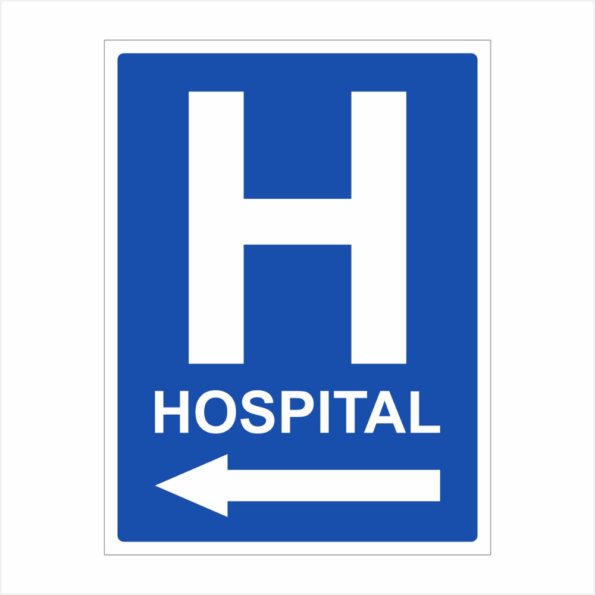





Hospital Signage

Signxpress India has taken an initiative on Social Cause, Mandatory to provide Barrier-free accessibility in Schools-Colleges’ Buildings for Vision Impaired – Blind people.

Overview

Modern healthcare facilities are designed to deliver exceptional patient care, but even the most advanced hospital can become confusing without an effective hospital signage system. From guiding patients to the correct department to communicating safety protocols and emergency exits, signage plays an essential role in creating a safe, organized, and stress-free environment.

Whether it is interior hospital signage that helps visitors locate consultation rooms or outdoor hospital signage that directs ambulances and patients toward emergency entrances, every sign contributes to smoother hospital operations. Likewise, a professionally designed signage board for hospital facilities enhances branding while ensuring regulatory compliance and improving accessibility for everyone.

As healthcare institutions continue to expand, investing in high-quality directional signage for hospital campuses and comprehensive signage for hospital premises has become more important than ever. A well-planned signage strategy not only improves navigation but also supports patient confidence, staff productivity, and overall operational efficiency.

This comprehensive guide explores everything you need to know about hospital signage, including its importance, types, technical specifications, applications, implementation strategies, future trends, and why Signxpress India is a trusted partner for healthcare signage solutions.

HOSPITAL ZONE SIGNAGE

Item Code: HZ-SIGN-214-0001

HOSPITAL ZONE SIGNAGE

Item Code: HZ-SIGN-214-0002

HOSPITAL ZONE SIGNAGE

Item Code: HZ-SIGN-214-0003

HOSPITAL ZONE SIGNAGE

Item Code: HZ-SIGN-214-0004

HOSPITAL ZONE SIGNAGE

Item Code: HZ-SIGN-214-0005

HOSPITAL ZONE SIGNAGE

Item Code: HZ-SIGN-214-0006

HOSPITAL ZONE SIGNAGE

Item Code: HZ-SIGN-214-0007

HOSPITAL ZONE SIGNAGE

Item Code: HZ-SIGN-214-0008

HOSPITAL ZONE SIGNAGE

Item Code: HZ-SIGN-214-0009

HOSPITAL ZONE SIGNAGE

Item Code: HZ-SIGN-214-0010

HOSPITAL ZONE SIGNAGE

Item Code: HZ-SIGN-214-0011

HOSPITAL ZONE SIGNAGE

Item Code: HZ-SIGN-214-0012

HOSPITAL ZONE SIGNAGE

Item Code: HZ-SIGN-214-0013

HOSPITAL ZONE SIGNAGE

Item Code: HZ-SIGN-214-0014

HOSPITAL ZONE SIGNAGE

Item Code: HZ-SIGN-214-0015

HOSPITAL ZONE SIGNAGE

Item Code: HZ-SIGN-214-0016

HOSPITAL ZONE SIGNAGE

Item Code: HZ-SIGN-214-0017

HOSPITAL ZONE SIGNAGE

Item Code: HZ-SIGN-214-0018

HOSPITAL ZONE SIGNAGE

Item Code: HZ-SIGN-214-0019

HOSPITAL ZONE SIGNAGE

Item Code: HZ-SIGN-214-0020

HOSPITAL ZONE SIGNAGE

Item Code: HZ-SIGN-214-0021

HOSPITAL ZONE SIGNAGE

Item Code: HZ-SIGN-214-0022

HOSPITAL ZONE SIGNAGE

Item Code: HZ-SIGN-214-0023

HOSPITAL ZONE SIGNAGE

Item Code: HZ-SIGN-214-0024

What is Hospital Signage?

Hospital signage refers to a complete visual communication system installed throughout healthcare facilities to provide information, directions, warnings, identification, and safety instructions. It consists of strategically placed signs that help patients, visitors, healthcare professionals, and emergency responders navigate the facility efficiently.

Unlike ordinary commercial signage, hospital signage must balance functionality, readability, accessibility, durability, and compliance with healthcare standards. Every sign should communicate important information instantly while remaining easy to understand for people of different ages, languages, and physical abilities.

An effective hospital signage system includes both indoor and outdoor elements that work together to create a seamless navigation experience.

Hospitals often serve thousands of visitors daily, many of whom may already be under stress due to medical emergencies or health concerns. Proper signage minimizes confusion, reduces delays, and enables healthcare providers to focus more on patient care rather than repeatedly providing directions.

Why Hospital Signage Matters in Modern Healthcare

Healthcare facilities operate around the clock and involve numerous departments, specialized treatment areas, emergency services, laboratories, pharmacies, and administrative offices. Without an organized signage system, visitors may struggle to locate their destinations, causing frustration and operational inefficiencies.

Well-designed hospital signage provides numerous advantages:

  • Improves patient navigation throughout large healthcare campuses.
  • Reduces visitor anxiety by providing clear directions.
  • Supports faster emergency response.
  • Enhances hospital branding and professional appearance.
  • Improves accessibility for differently-abled individuals.
  • Helps hospitals maintain safety standards.
  • Reduces workload on reception staff.
  • Improves workflow for healthcare professionals.
  • Creates a positive first impression.
  • Supports regulatory compliance.

Hospitals that prioritize high-quality signage often experience smoother patient flow, better visitor satisfaction, and increased operational efficiency.

Understanding Interior Hospital Signage

Interior hospital signage forms the backbone of an effective wayfinding system. These signs are installed throughout the building to assist patients, visitors, medical staff, and maintenance personnel.

Interior signs are carefully planned based on patient movement patterns, department layouts, emergency routes, and accessibility requirements.

1. Department Identification Signs

Department signs clearly identify areas such as:

  • Emergency Department
  • Intensive Care Unit
  • Operation Theatre
  • Radiology
  • Laboratory
  • Pharmacy
  • Pediatric Ward
  • Maternity Ward
  • Cardiology
  • Oncology
  • Orthopedics

These signs allow visitors to identify destinations immediately without asking hospital staff.

2. Room Identification

Individual room signs help locate:

  • Consultation Rooms
  • Doctor Cabins
  • Waiting Areas
  • Nurse Stations
  • Patient Rooms
  • Examination Rooms
  • Restrooms

Clear room identification minimizes confusion and supports smooth patient movement.

3. Patient Information Signs

These signs communicate:

  • Visiting hours
  • Hygiene instructions
  • Mask requirements
  • Infection control guidelines
  • Patient rights
  • Hospital policies

Proper patient communication reduces misunderstandings while improving healthcare experiences.

Outdoor Hospital Signage and Campus Navigation

Outdoor hospital signage creates the first interaction visitors have with a healthcare facility. It guides people from the road to the appropriate building or department while enhancing the hospital’s professional image.

Outdoor signage typically includes:

1. Main Entrance Signs

Large entrance signs identify the hospital and establish brand visibility.

2. Emergency Entrance Signs

Clearly marked emergency entrances reduce response time during medical emergencies.

3. Parking Guidance

Parking signs help patients quickly locate:

  • Visitor Parking
  • Staff Parking
  • Ambulance Parking
  • Accessible Parking
  • Two-Wheeler Parking

4. Building Identification

Large healthcare campuses often consist of multiple buildings. Building identification signs eliminate confusion and simplify navigation.

5.. Traffic Direction Signs

Directional arrows help vehicles reach emergency departments, outpatient services, diagnostic centers, and parking areas efficiently.

Importance of Directional Signage for Hospital Navigation

Among all signage categories, directional signage for hospital facilities is perhaps the most critical.
Directional signs help users travel from one location to another using clear visual guidance.

Examples include:

  • Reception →
  • Pharmacy →
  • MRI Department →
  • ICU →
  • Blood Bank →
  • Laboratory →
  • Emergency →
  • Exit →
  • Lift →
  • Staircase →

Hospitals should place directional signs at every major decision point, including intersections, corridors, elevators, staircases, and building entrances.

Effective directional signage minimizes confusion while improving patient satisfaction and reducing delays.

Hospital Signage vs Traditional Commercial Signage

Feature Hospital Signage General Commercial Signage
Primary Purpose
Navigation, Safety, Information
Branding and Promotion
User Experience
Patient-focused
Customer-focused
Accessibility
High Priority
Moderate Priority
Compliance
Healthcare Standards
General Business Standards
Wayfinding
Extensive
Limited
Emergency Communication
Essential
Optional
Information Density
High
Moderate

Signage Board for Hospital Branding

A professionally designed signage board for hospital serves both functional and branding purposes.
It communicates professionalism while reinforcing the hospital’s identity.
Common signage boards include:

  • Main hospital entrance boards
  • Reception branding
  • Department identification
  • Building name boards
  • Outdoor monument signs
  • Emergency identification boards
  • Digital information displays

These boards should maintain consistent branding through typography, colors, logos, and materials.

Comprehensive Signage for Hospital Premises

Modern healthcare campuses require integrated signage for hospital premises that extends beyond buildings.

Hospital premises signage includes:

  • Roadway guidance
  • Parking information
  • Garden directions
  • Ambulance routes
  • Emergency assembly points
  • Security checkpoints
  • Waste disposal instructions
  • Loading areas
  • Staff entrances
  • Visitor entrances

A complete signage ecosystem improves both operational efficiency and visitor experience.

Why Choose signxpress india

When it comes to reliable and high-performance fire exit signage, signxpress india stands out as a trusted provider.

What Sets Them Apart:

  • Customized Solutions: Tailored sizes and designs
  • Premium Materials: Durable acrylic sheets
  • Versatile Installation Options: From wall-mounted to hanging systems
  • Industry Expertise: Serving hospitals, schools, and entertainment venues
  • Compliance-Focused: Designed to meet safety standards

Their approach combines functionality, durability, and design, ensuring that every sign performs when it matters most.


Types of Hospital Signage

Healthcare environments require multiple categories of signage to address different communication needs.

1. Wayfinding Signage

Wayfinding signs help visitors navigate complex hospital layouts efficiently.
These signs include directional arrows, maps, floor directories, and navigation boards.

2. Identification Signage

Identification signage labels:

  • Buildings
  • Departments
  • Rooms
  • Laboratories
  • Clinics
  • Operation theatres

3. Safety Signage

Safety signs communicate important warnings including:

  • Biohazard areas
  • Radiation zones
  • High-voltage rooms
  • Restricted access
  • Fire exits
  • Emergency evacuation routes

4. Regulatory Signage

Hospitals use regulatory signs to communicate mandatory instructions such as:

  • No Smoking
  • Authorized Personnel Only
  • Wear PPE
  • Hand Sanitization Required

5. Informational Signage

Informational signs provide helpful instructions regarding:

  • Hospital policies
  • Visitor guidelines
  • Department timings
  • Patient registration
  • Queue management

Materials Used in Hospital Signage

Selecting the right material significantly impacts durability, appearance, maintenance, and long-term performance.

1. Aluminium

Aluminium offers excellent durability, corrosion resistance, and lightweight construction. It is ideal for outdoor hospital signage and directional systems.

2. Acrylic

Acrylic provides a premium appearance with smooth finishes and vibrant colors. It is widely used for reception signs, department boards, and branding elements.

3. ACP (Aluminium Composite Panel)

ACP combines strength, weather resistance, and attractive aesthetics, making it suitable for both indoor and outdoor signage applications.

4. Stainless Steel

Stainless steel offers exceptional durability and premium aesthetics, making it perfect for hospitals seeking long-lasting, elegant signage solutions.

5. Sunboard

Sunboard provides lightweight, economical solutions suitable for temporary information boards and promotional healthcare displays.

Applications of Hospital Signage

Hospital signage supports virtually every area within a healthcare facility.

Common applications include:

  • Hospitals
  • Medical Colleges
  • Diagnostic Centers
  • Clinics
  • Specialty Hospitals
  • Rehabilitation Centers
  • Nursing Homes
  • Blood Banks
  • Healthcare Campuses
  • Medical Research Facilities

Each healthcare environment requires customized signage planning based on patient movement, service complexity, and building architecture.

Benefits of Professional Hospital Signage

A professionally designed signage system provides measurable operational and patient-care benefits.
Improved navigation reduces visitor stress and allows patients to reach appointments on time. Clear identification signs help medical staff move efficiently between departments while minimizing unnecessary interruptions.
Consistent signage also strengthens hospital branding by creating a modern, organized, and trustworthy environment.
Other long-term advantages include enhanced accessibility, improved emergency preparedness, easier maintenance, better visitor experiences, and stronger regulatory compliance.
Hospitals investing in comprehensive signage often experience improved operational efficiency and higher patient satisfaction.

Hospital Signage Workflow

A successful signage project follows a structured implementation process.

The workflow generally includes:

  1. Site survey and facility assessment.
  2. Understanding hospital departments and visitor flow.
  3. Wayfinding strategy development.
  4. Graphic and signage design.
  5. Material selection.
  6. Manufacturing customized signage.
  7. Quality inspection.
  8. Professional installation.
  9. Final testing and navigation review.
  10. Ongoing maintenance and future expansion planning.

A structured workflow ensures consistency throughout the healthcare facility.

Common Challenges in Hospital Signage

Even modern hospitals encounter signage-related challenges.

1. Complex Building Layouts

Large hospitals often consist of interconnected buildings, making navigation difficult without a coordinated signage strategy.

Solution

Develop a complete wayfinding master plan before installing signage.

2. Inconsistent Sign Designs

Different fonts, colors, and layouts create confusion.

Solution

Maintain standardized branding and visual hierarchy throughout the hospital.

3. Poor Visibility

Small fonts or poorly positioned signs reduce effectiveness.

Solution

Use appropriate font sizes, contrasting colors, and strategic installation heights.

4. Frequent Department Changes

Healthcare facilities often expand or reorganize departments.

Solution

Use modular signage systems that allow easy updates without replacing the entire structure.

Emerging Trends in Hospital Signage

Healthcare signage continues evolving with advancements in technology and patient expectations.

Modern trends include:

  • Digital wayfinding displays
  • Interactive navigation kiosks
  • QR-enabled information systems
  • Multilingual signage
  • Touchless information access
  • Smart LED directional systems
  • Sustainable signage materials
  • Universal accessibility design
  • High-contrast typography
  • Integrated branding systems

Hospitals increasingly prioritize patient-centered design while incorporating technology into navigation systems.

Best Practices for Implementing Hospital Signage

Healthcare organizations should follow several proven strategies to maximize signage effectiveness.

Begin with a comprehensive wayfinding audit before designing new signage. Understand visitor movement patterns and identify common navigation challenges. Maintain consistency in typography, colors, icons, and terminology throughout the facility.

Use internationally recognized symbols wherever possible. Ensure signs remain visible under various lighting conditions. Place directional signage before decision points rather than after them.

Accessibility should remain a central consideration. Include readable fonts, high contrast, appropriate mounting heights, and universal design principles to accommodate all visitors.

Regular maintenance is equally important. Damaged, faded, or outdated signs should be replaced promptly to maintain reliability.

Common Mistakes to Avoid

Many healthcare facilities unintentionally reduce signage effectiveness through avoidable mistakes.

Avoid:

  • Installing too many signs in one location.
  • Using inconsistent terminology.
  • Choosing decorative fonts over readability.
  • Ignoring accessibility standards.
  • Poor placement near ceilings or obstacles.
  • Inadequate lighting around signs.
  • Lack of multilingual communication where needed.
  • Failing to update departmental changes.
  • Overcomplicated directional systems.
  • Poor maintenance planning.

Avoiding these mistakes significantly improves user experience.

Why Choose Signxpress India for Hospital Signage?

Selecting the right signage partner directly influences the success of your healthcare navigation system. Signxpress India delivers customized hospital signage solutions designed to meet the demanding requirements of modern healthcare environments.

With expertise in designing and manufacturing hospital signage, the company offers solutions that combine functionality, durability, aesthetics, and long-term performance. Every project is tailored to the unique layout and operational needs of healthcare facilities, ensuring seamless navigation and effective communication.

Signxpress India provides customized signage using premium materials such as Aluminium, Acrylic, ACP, Stainless Steel, and Sunboard. The flexibility in sheet thickness ranging from 0.5 mm to 25 mm allows solutions for diverse indoor and outdoor applications. Whether hospitals require interior hospital signage, outdoor hospital signage, a premium signage board for hospital, or complete signage for hospital premises, each solution is designed with precision and attention to detail.

The company also offers multiple installation options, including wall-mounted, floor-mounted, and stand-alone systems, making implementation suitable for hospitals of every size. Applications cover wayfinding, navigation, safety communication, warning signs, and patient care instructions, helping healthcare facilities create organized, compliant, and patient-friendly environments.

By combining quality manufacturing, thoughtful design, and scalable solutions, Signxpress India enables hospitals to improve operational efficiency while delivering a better patient experience.

Conclusion

A well-designed hospital signage system is far more than a collection of signs—it is a vital communication infrastructure that supports patient safety, efficient navigation, accessibility, and operational excellence. From interior hospital signage that guides visitors through departments to outdoor hospital signage that streamlines campus navigation, every element contributes to a more organized and welcoming healthcare environment.

Choosing the right signage board for hospital facilities and implementing effective directional signage for hospital campuses helps reduce confusion, improve workflow, and strengthen patient confidence. Comprehensive signage for hospital premises also ensures that staff, patients, visitors, and emergency responders can move through the facility quickly and safely.

If your healthcare organization is planning to upgrade or implement a complete hospital signage system, partnering with an experienced specialist like Signxpress India ensures a solution that is customized, scalable, durable, and aligned with modern healthcare requirements. Explore a tailored signage strategy that enhances navigation, reinforces your brand, and delivers lasting value for patients, visitors, and healthcare professionals alike.

FAQs

1. What is hospital signage and why is it important?

Hospital signage is a system of visual signs used to guide patients, visitors, and staff throughout a healthcare facility. It improves navigation, enhances patient safety, supports emergency response, and creates a better overall healthcare experience.

2. What are the different types of hospital signage?

The main types of hospital signage include interior hospital signage, outdoor hospital signage, directional signage for hospital, safety and warning signs, patient information signs, department identification signs, emergency exit signs, and regulatory signage.

3. What is interior hospital signage?

Interior hospital signage includes signs installed inside healthcare facilities to identify departments, patient rooms, waiting areas, laboratories, operation theatres, pharmacies, and other important locations, making navigation easier for visitors and staff.

4. Why is directional signage for hospital facilities essential?

Directional signage for hospital facilities helps patients and visitors quickly locate departments, emergency rooms, diagnostic centers, and other services. It reduces confusion, improves operational efficiency, and enhances patient satisfaction.

5. What materials are commonly used for hospital signage?

Hospital signage is commonly manufactured using Aluminium, Acrylic, ACP (Aluminium Composite Panel), Stainless Steel, and Sunboard. The material selection depends on the location, durability requirements, and design preferences.

6. What is the purpose of outdoor hospital signage?

Outdoor hospital signage helps patients and visitors locate the hospital entrance, emergency department, parking areas, ambulance access points, and different buildings within the hospital campus while strengthening the hospital’s brand identity.

7. How does a signage board for hospital improve patient experience?

A professionally designed signage board for hospital facilities provides clear information and directions, reduces visitor stress, minimizes navigation errors, and creates a welcoming and organized healthcare environment.

8. What should be included in signage for hospital premises?

Signage for hospital premises should include entrance signs, parking directions, emergency routes, department directories, safety instructions, visitor guidance, accessibility signs, and wayfinding systems to ensure smooth movement across the campus.

9. How does hospital signage improve patient safety?

Hospital signage enhances patient safety by displaying emergency exits, restricted areas, infection control instructions, fire safety information, warning signs, and evacuation routes that help prevent accidents and improve emergency preparedness.

10. Can hospital signage be customized?

Yes. Hospital signage can be fully customized based on the healthcare facility’s layout, branding, department structure, material preferences, mounting options, colors, typography, and accessibility requirements.

11. What are the best materials for interior hospital signage?

Acrylic, Stainless Steel, Aluminium, and ACP are among the most popular materials for interior hospital signage because they offer excellent durability, professional aesthetics, and easy maintenance.

12. What industries besides hospitals use healthcare signage?

Healthcare signage is also widely used in clinics, nursing homes, diagnostic centers, medical colleges, rehabilitation centers, blood banks, specialty hospitals, laboratories, and healthcare research facilities.

13. How do hospitals plan an effective wayfinding signage system?

Hospitals typically begin with a site survey, analyze visitor movement patterns, create a wayfinding strategy, design consistent signage, select suitable materials, and professionally install signs throughout the facility for optimal navigation.

14. What mounting options are available for hospital signage?

Hospital signage is available in multiple installation options, including wall-mounted, floor-mounted, ceiling-mounted, hanging, suspended, and stand-alone signage systems depending on the application and available space.

15. How often should hospital signage be updated?

Hospital signage should be reviewed regularly and updated whenever departments relocate, services expand, branding changes, safety regulations are revised, or signs become damaged or difficult to read.

16. What features should a high-quality hospital signage system include?

A quality hospital signage system should offer clear typography, durable materials, consistent branding, high visibility, accessibility compliance, multilingual support when needed, easy maintenance, and effective wayfinding.

17. What is the difference between hospital signage and commercial signage?

Hospital signage primarily focuses on navigation, safety, accessibility, and patient communication, while commercial signage is generally designed for branding, advertising, and promotional purposes.

18. Why is accessibility important in hospital signage?

Accessible hospital signage ensures that people with visual, physical, or cognitive impairments can navigate healthcare facilities safely through readable fonts, high-contrast colors, universally recognized symbols, and appropriate placement.

19. How do hospitals benefit from professional hospital signage solutions?

Professional hospital signage improves operational efficiency, strengthens hospital branding, reduces visitor confusion, enhances patient satisfaction, supports regulatory compliance, and creates a safer healthcare environment.

20. Why choose Signxpress India for hospital signage solutions?

Signxpress India offers customized hospital signage solutions using premium materials such as Aluminium, Acrylic, ACP, Stainless Steel, and Sunboard. With customizable sizes, multiple mounting options, and applications ranging from wayfinding and navigation to safety and patient care instructions, the company delivers durable, high-quality signage solutions tailored to modern healthcare facilities.

My Cart
Categories
hospital signage

Download PDF CATALOG

Skip to content